Abhyaksa: Elegant Typography Inspired by Classic Posters
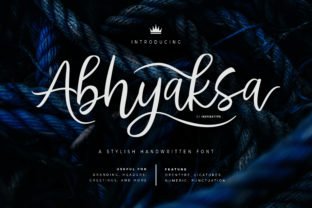
Abhyaksa is a carefully crafted display font that draws its character from vintage poster art—think bold announcements, theatrical bills, and mid-century advertising where every letter carried weight, rhythm, and intention. Its structure balances strong verticals with expressive curves, and its standout feature is a rich set of swashes: graceful, extended strokes that lend movement and sophistication to individual letters. These aren’t decorative afterthoughts—they’re built into the font’s OpenType features, ready to activate with compatible software.
Why Abhyaksa Resonates Across Different Creative Roles
Typography isn’t one-size-fits-all—and neither is Abhyaksa’s usefulness. How it fits into your workflow depends less on what it *is*, and more on what you’re trying to say, who you’re speaking to, and how much control you need over the final impression.
For Designers & Brand Professionals
If you craft identities for small businesses or boutique studios, Abhyaksa offers immediate visual distinction. Its swashes let you build custom monograms or stylized initials without needing illustration skills—just smart font usage in tools like Adobe Illustrator or Affinity Designer. A café owner might use the swashed “C” and “O” in “Cocoa & Oak” across signage and packaging, giving consistency and warmth without overcomplicating production. Here, flexibility and presentation quality matter most—Abhyaksa delivers both without requiring advanced coding or plugin dependencies.
For Educators & Content Creators
Teachers designing classroom posters, workshop handouts, or digital slide decks often need type that commands attention while remaining legible at a glance. Abhyaksa works well for headings and titles—not body text—but its clarity at larger sizes makes it ideal for visual learning aids. One high school art instructor uses the regular weight for project rubrics and switches to swash variants only for exhibition banners, teaching students how typographic choices shape tone. For this group, ease of use and pedagogical value outweigh technical complexity.
For Entrepreneurs & Small Business Owners
When launching a product line—say, artisanal candles or handmade ceramics—first impressions hinge on perceived care and craftsmanship. Abhyaksa helps convey that without hiring a designer for every touchpoint. Its licensing typically permits commercial use (always verify the specific license), so you can confidently apply it to labels, Shopify store headers, or Instagram story templates. Speed and reliability are key here: knowing the font renders consistently across devices and prints cleanly saves time during tight launch windows.
For Hobbyists & Self-Taught Makers
You don’t need formal training to appreciate Abhyaksa’s impact. Whether you're making wedding invitations in Canva (with desktop app support), stitching embroidered shop names onto tote bags, or laser-cutting wooden signs, its strong shapes translate well across mediums. A beginner calligrapher might study its swash forms as reference before attempting hand-drawn versions—making Abhyaksa not just a tool, but a quiet teacher. For this audience, accessibility and creative encouragement matter more than exhaustive stylistic options.
What to Consider Before Using Abhyaksa
Like any expressive typeface, Abhyaksa shines brightest when matched thoughtfully to context. Ask yourself:
- Is legibility at smaller sizes important? Abhyaksa is designed for display—not paragraphs. Reserve it for headlines, logos, or short phrases.
- Do you have access to OpenType-aware software? Swashes require applications that support contextual alternates (e.g., Illustrator, InDesign, Affinity apps, or recent versions of Figma). Basic word processors won’t unlock its full potential.
- Does your project prioritize uniqueness or broad compatibility? While Abhyaksa stands out visually, it’s not a system font. If you’re embedding it in web projects, consider variable loading strategies or fallback stacks to ensure readability where it’s unsupported.
- What’s your comfort level with font management? Installing and organizing fonts is simple for many—but if you juggle dozens of typefaces regularly, Abhyaksa’s clean naming and consistent spacing make it easy to locate and preview alongside others.
Real-World Uses That Show Its Range
A freelance photographer used Abhyaksa’s bold capitals for her studio name on business cards, then activated subtle swashes only on her website hero banner—creating hierarchy without clutter. A university department applied the font to event posters for a film series, pairing it with a neutral sans-serif for body copy; attendees consistently remarked on how “cinematic” the materials felt. Meanwhile, a ceramicist printed Abhyaksa-based stamps directly onto clay before firing—its confident stroke weight held up beautifully through the process.
None of these users needed to master kerning tables or write CSS @font-face rules. They matched Abhyaksa’s strengths—expressive form, intentional contrast, and tactile presence—to their actual constraints and goals.
How It Compares to Other Display Fonts
Unlike ultra-thin script fonts that fade at distance, or tightly spaced serif fonts that feel academic, Abhyaksa occupies a middle ground: warm but authoritative, decorative but functional. It doesn’t try to be everything—it knows its role. That focus makes it easier to evaluate honestly: if your project calls for elegance rooted in physical media (posters, letterpress, signage), Abhyaksa responds with authenticity. If you need extreme versatility across UI, data viz, or multilingual publishing, another option may serve better.
Its learning curve is gentle. You can start with basic character input and explore swashes later—or skip them entirely and still benefit from its balanced proportions and refined terminals. There’s no pressure to “use all the features,” just like there’s no requirement to play every note in a musical scale to create something meaningful.
Final Thought: Does Abhyaksa Fit Your Next Project?
Abhyaksa isn’t about trend-chasing. It’s about choosing a voice that feels intentional—not generic, not fleeting, but grounded in craft. If you’re drawn to typography that carries history without feeling dated, that supports creativity without demanding expertise, and that helps your message land with quiet confidence—then Abhyaksa is worth your attention.
Try it on a single headline first. See how it changes the air around your words. Then decide—not based on what others say it *should* do, but on what it actually does for your work, right now.