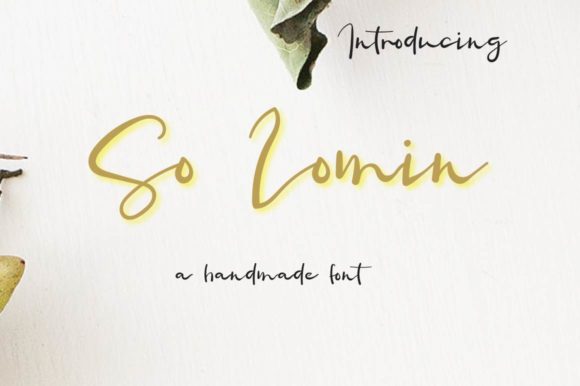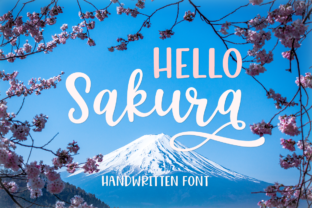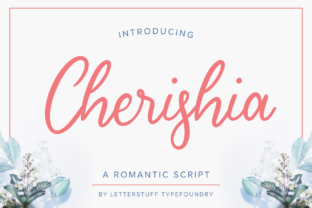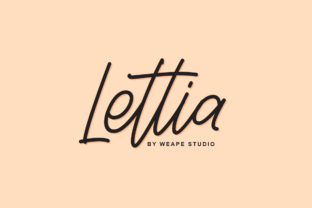
Saminos: Elegant Handwritten Font for Timeless Design
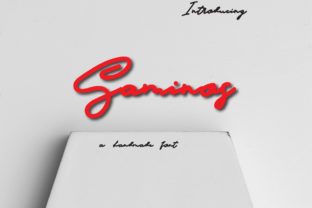
There’s a quiet power in handwriting—the slight variation in stroke weight, the gentle rhythm of connected letters, the subtle imperfection that signals human presence. Saminos captures that essence with remarkable fidelity: a classic and elegant handwritten font that will effortlessly put a charming twist on any design project. It doesn’t shout. It invites. And for professionals and creators who value authenticity without sacrificing polish, Saminos offers something rare—a script font that feels both personal and professional.
Why Saminos Stands Apart From Other Handwritten Fonts
Not all script fonts age well. Some feel overly casual for branding; others lean too far into calligraphic formality and lose warmth. Saminos occupies a refined middle ground. Its letterforms are based on natural penmanship—slight flourishes, consistent baseline alignment, and graceful entry/exit strokes—but with enough structure to ensure legibility at smaller sizes and across digital interfaces. Unlike many handwritten typefaces that rely on excessive swashes or unpredictable alternates, Saminos prioritizes clarity and consistency. That makes it unusually versatile: equally at home on a wedding invitation, a boutique product label, or the hero section of a wellness blog.
For Branding That Feels Human, Not Generic
Small business owners and entrepreneurs often struggle to differentiate their visual identity in crowded markets. Stocky sans-serifs feel safe but forgettable; overly ornate scripts can alienate or confuse. Saminos bridges that gap. A local bakery might use it for its logo and packaging—evoking craft and care without seeming twee. A mindfulness coach could apply it to course titles and email headers, reinforcing calm intentionality. Because Saminos avoids exaggerated loops or forced irregularity, it scales well across touchpoints: from Instagram story text to printed business cards—without requiring manual kerning adjustments or fallback fonts.
Designers Save Time Without Sacrificing Nuance
Freelancers and in-house designers know the time cost of “hand-lettering” custom assets for every campaign. Saminos eliminates much of that overhead. Its OpenType features include standard ligatures and contextual alternates that activate automatically in supported software (like Adobe Illustrator or Affinity Designer), giving text organic flow without manual intervention. You don’t need to swap glyphs one by one to avoid awkward collisions—Saminos handles common letter pairings intelligently. That means faster mockups, smoother client revisions, and more time spent refining messaging or layout instead of tweaking individual characters.
Where Legibility Meets Personality
Bloggers and educators often default to highly legible—but emotionally neutral—sans-serifs for body copy. That’s sound practice. But headings, pull quotes, and section dividers are where personality shines. Saminos excels here. At 24–36pt sizes, its open counters and balanced spacing maintain readability even with moderate line lengths. Try it for podcast episode titles, workshop subtitles, or newsletter sign-up headers: it adds distinction without demanding attention. Just be mindful below 18pt—especially in long paragraphs or low-contrast settings. For body text, pairing Saminos with a clean, humanist sans-serif (like Lato or Nunito) creates a harmonious, accessible hierarchy.
Real-World Use Cases That Highlight Its Strengths
- Publishers & Authors: Use Saminos for book title treatments, chapter headings, or limited-edition cover variants. Its elegance supports literary or memoir genres without veering into cliché.
- Educators & Course Creators: Apply it selectively to learning module names or certificate headers. The warmth helps soften the formality of academic material—particularly effective in early childhood or creative skill-building contexts.
- Wedding & Event Planners: It works beautifully for RSVP cards, seating charts, or digital save-the-dates—especially when paired with muted color palettes and ample whitespace.
- Product-Based Small Businesses: Soap makers, ceramicists, and stationery brands find Saminos reinforces artisanal values while remaining shelf-ready and web-friendly.
A Note on Fit and Context
Saminos isn’t designed for high-volume data display, legal disclaimers, or multilingual interfaces with complex diacritics (it supports Latin-based languages but lacks extended Cyrillic or Arabic glyph sets). It also doesn’t include bold or italic weights—its expressiveness comes from its single, carefully tuned style. That’s intentional: it encourages thoughtful application rather than overuse. If your project demands heavy typographic contrast or needs to support technical documentation, consider using Saminos as an accent face—not the sole workhorse.
How to Use Saminos Thoughtfully (Not Just Decoratively)
Start small. Add it to one high-impact element—your site’s main headline, a signature email footer, or the tagline on your portfolio thumbnail—and observe how it shifts perception. Notice whether it strengthens voice or distracts from message. Because Saminos carries tonal weight, mismatched usage (e.g., slapping it onto a cybersecurity startup’s homepage) can unintentionally undercut credibility. Ask yourself: does this usage reflect how my audience experiences my work? Does it align with the feeling I want them to carry away?
Pairing matters. Avoid competing scripts or ultra-thin serifs that clash in contrast. Instead, try it with modestly spaced, medium-weight sans-serifs—fonts with soft terminals and generous x-heights. For print, test on your intended paper stock: uncoated matte surfaces enhance Saminos’ tactile quality, while glossy finishes may mute its subtlety.
Who Benefits Most—and Why
Creatives who already understand typography basics will appreciate Saminos’ restraint and craftsmanship. But it’s also exceptionally approachable for non-designers: bloggers using Canva, teachers building Google Slides decks, or shop owners updating Shopify banners. Its predictability means fewer formatting surprises. No need to hunt for obscure character maps or troubleshoot missing glyphs mid-project. What you see in the preview is what you get—clean, consistent, and quietly confident.
That said, if your work relies heavily on rapid iteration across dozens of brand variations—or requires strict WCAG AA compliance for large blocks of text—evaluate whether Saminos serves the functional need, or whether it’s better reserved for moments of intentional emphasis. Used with purpose, it deepens connection. Used without intention, it fades into background noise like any other decorative font.
Final Thought: Elegance Is a Choice, Not a Default
In an era of algorithm-driven templates and AI-generated visuals, hand-crafted nuance stands out—not because it’s rare, but because it signals care. Saminos doesn’t automate personality; it enables it. It won’t fix weak messaging or poor layout decisions. But when applied with attention to context, audience, and goal, it becomes a quiet amplifier: elevating sincerity, reinforcing voice, and grounding digital work in something recognizably human. That’s not just aesthetic preference. It’s communication strategy—with ink, not code.