Getterlin: The Modern Calligraphy Font That Elevates Real-World Design
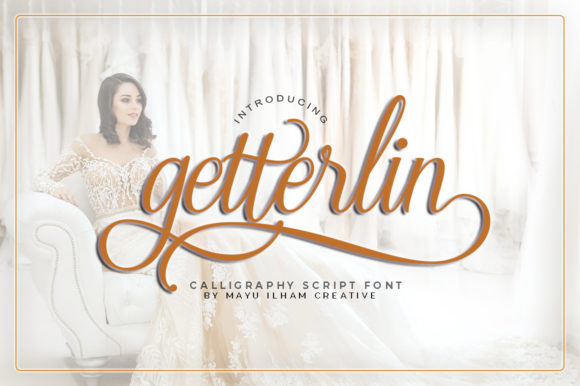
Getterlin isn’t just another script font—it’s a carefully crafted modern calligraphy typeface with organic rhythm, expressive contrast, and a deliberately varied baseline that breathes life into static text. Unlike rigid digital scripts or overly ornate traditional fonts, Getterlin strikes a quiet balance: it feels handwritten but remains highly legible, elegant but never fussy, timeless but unmistakably contemporary. If you’ve ever stared at a wedding invitation, a boutique storefront sign, or even your own business logo and thought, “This needs more soul—but not more clutter,” Getterlin is likely the subtle upgrade you’ve been missing.
Where Getterlin Fits Naturally—Not Just Where It *Can* Fit
Fonts don’t exist in isolation—they live in context. Getterlin shines brightest when it’s given space to do what it does best: convey intention, warmth, and quiet confidence. Here’s where that happens most often—and why:
- Wedding stationery: Couples choosing Getterlin for their invitations, menus, or ceremony programs aren’t chasing trendiness—they’re signaling care. The slight baseline variation mimics the gentle rise and fall of hand-lettered ink, making names and dates feel personal, not pre-printed. One designer shared that clients consistently describe Getterlin as “feeling like it was written just for us”—a rare emotional resonance few fonts deliver.
- Small-batch branding: Think artisanal coffee roasters, ceramic studios, natural skincare lines, or independent bookshops. These brands rely on authenticity over polish. Getterlin works beautifully on matte paper labels, embossed business cards, or hand-painted shop signs—not because it looks “handmade,” but because its imperfections feel intentional and human. It avoids the sterility of sans-serifs without slipping into vintage cliché.
- Signature elements in digital interfaces: Yes—even online. When used sparingly (e.g., for a founder’s signature beneath a brand manifesto, or as a stylized “thank you” on a checkout page), Getterlin adds tactile warmth to otherwise flat screens. It performs well at larger sizes (36pt and up) and holds clarity in high-resolution displays, especially when paired with clean, neutral body fonts like Inter or Lora.
- Event posters and local signage: Community theaters, farmers’ markets, gallery openings—these rely on visual warmth and approachability. A poster using Getterlin for the event title, set against a textured background or soft watercolor wash, instantly feels more inviting than one using generic script fonts. Its open letterforms prevent crowding, even at moderate sizes on outdoor banners.
Who Benefits—and How They Use It Differently
A graphic designer working on a luxury skincare launch might use Getterlin for the product name on packaging—emphasizing craftsmanship and care. A wedding planner may license it for client-facing templates, knowing it conveys elegance without requiring custom hand-lettering (and its associated time and cost). Meanwhile, a teacher designing classroom certificates or a nonprofit creating donor recognition plaques finds Getterlin accessible: it installs like any other font, renders reliably across platforms, and doesn’t demand advanced typographic knowledge to use effectively.
Even non-designers get value from Getterlin. Entrepreneurs building their first Shopify store, creators launching Patreon tiers, or authors formatting paperback interiors all benefit from its ready-made sophistication. You don’t need to kern every pair or adjust tracking manually—Getterlin’s spacing is thoughtfully built-in, so “Sarah & James” or “Hearth & Vine” looks balanced right out of the box.
Practical Considerations Before You Apply It
Like any tool, Getterlin works best when matched to the job—not forced into roles it wasn’t designed for. Here’s what to keep in mind:
- Size matters: It thrives at 24pt and above. At small sizes (under 14pt), especially in body copy or dense captions, the fine strokes and baseline variation can blur or reduce readability. Reserve it for headings, quotes, logos, or short impactful phrases—not paragraphs.
- Contrast is your friend: Getterlin pairs naturally with low-contrast sans-serifs (like Poppins or Manrope) or gentle serifs (like Merriweather or Cormorant Garamond). Avoid pairing it with other decorative or high-contrast scripts—that creates visual competition, not harmony.
- Color and weight play quietly: It’s designed as a single-weight, medium-dark script. While it looks stunning in deep charcoal, navy, or rich burgundy, avoid ultra-light tints or neon colors that compromise its delicate stroke integrity. For accessibility, always test contrast ratios—especially if using it over photos or gradients.
- Licensing is straightforward—but verify: Getterlin is available under standard desktop and web font licenses. If you’re embedding it in an app, SaaS dashboard, or physical product (like engraved wood signs), double-check the license scope. Most users only need the basic version—but clarity here prevents headaches later.
What Getterlin Does Well—And What It Doesn’t Try To Do
Its strength lies in nuance, not novelty. Getterlin doesn’t mimic calligraphy tools (no faux brush textures or ink bleeds), nor does it chase maximalist flair. Instead, it offers restrained expressiveness—ideal for designers who want personality without pretense. It handles English well, including common ligatures (“fi”, “fl”, “ff”) and accented characters used in French, Spanish, and German. However, it’s not built for extended multilingual support—so if your project requires full Cyrillic, Greek, or extended diacritics, confirm coverage before committing.
It also doesn’t solve poor hierarchy. Using Getterlin for every headline on a website won’t make the site feel elegant—it’ll make it feel monotonous. Its power comes from contrast: letting it shine where attention should linger, while supporting text stays clear and functional.
Real Moments, Not Just Mockups
You’ll find Getterlin on the chalkboard menu of a neighborhood bakery in Portland, spelled out in warm terracotta beside a hand-drawn croissant sketch. It’s in the foil-stamped belly band of a limited-edition poetry chapbook from a Brooklyn indie press. It’s the subtle “Est. 2018” beneath a minimalist logo on a ceramic mug sold at a Nashville craft fair. These aren’t speculative designs—they’re real applications where tone, trust, and tact matter more than technical perfection.
That’s the quiet truth about Getterlin: it doesn’t shout. It invites. It doesn’t decorate—it dignifies. Whether you're refreshing a decade-old brand identity or designing your first-ever logo, it offers a way to say something meaningful—without saying too much.