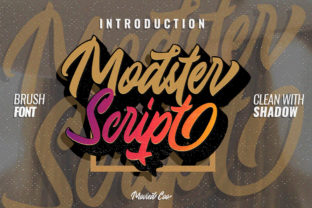
Modster Script
Imagine a font that doesn’t just sit on the page—but leans in, commands attention, and carries the effortless cool of city sidewalks at golden hour. That’s Modster Script: a hand-lettered, urban-inspired typeface crafted for designers who demand both authenticity and impact.
Unlike generic script fonts that fade into the background, Modster Script is built with intention—each curve drawn by hand, each stroke infused with rhythm and attitude. Its defining feature? A subtle yet dynamic shadow layer baked right into the design. This isn’t an afterthought or a quick Photoshop effect; it’s part of the glyph structure, lending instant depth, dimension, and tactile presence to any layout. In an era where visual noise competes for seconds of attention, that extra layer of character makes all the difference.
Why It Fits Modern Visual Design
In today’s fast-moving creative landscape, typography is rarely just about legibility—it’s about tone, identity, and emotional resonance. Modster Script bridges the gap between expressive handwriting and professional polish, making it ideal for brands and creators embracing modern aesthetics without sacrificing clarity or sophistication.
Its balanced weight distribution and generous x-height ensure strong readability across sizes—from small UI labels to large-scale murals—while its urban sensibility aligns seamlessly with contemporary branding strategies rooted in authenticity and cultural relevance.
Where Modster Script Delivers Real Value
Whether you're refining a brand identity or crafting a single social post, this font earns its place in your design workflow through versatility and intentionality. Here’s how it elevates real-world applications:
- Branding & logo design: Perfect for lifestyle brands, boutique studios, or creative agencies wanting a distinctive yet approachable mark—especially when paired with clean sans-serifs or textured neutrals.
- Social media graphics: Stands out in feeds without relying on heavy filters or overlays; works beautifully in carousel posts, Stories, and Reels thumbnails.
- Editorial & web design: Adds editorial flair to headlines, pull quotes, or hero sections—enhancing visual hierarchy while reinforcing voice and personality.
- Packaging & merchandise: Translates powerfully to physical formats like apparel tags, product labels, or limited-edition prints, where tactile quality and uniqueness matter.
- Digital marketing assets: Elevates email headers, landing page banners, and ad creatives with warmth and human energy—countering the sterility of over-automated campaigns.
What sets Modster Script apart isn’t just its look—it’s how it behaves within a broader design system. When used thoughtfully, it supports color palette decisions (think muted earth tones or high-contrast monochrome), informs spacing and composition choices, and reinforces narrative intent. For example, pairing it with tight kerning and generous line height creates breathing room and elegance; stacking it over grainy photography or minimalist gradients amplifies contrast and mood.
Before integrating it into your next project, consider three practical checkpoints: First, test scalability—does it retain charm at 14px and authority at 120px? Second, assess contrast against your background colors and imagery—its shadow works best with sufficient tonal separation. Third, audit consistency—reserve Modster Script for primary messaging only, letting supporting typefaces handle body copy and functional text. This discipline preserves its impact and avoids visual fatigue.
Typography remains one of the most accessible—and underutilized—levers for improving user experience, strengthening brand recall, and deepening audience connection. With Modster Script, you’re not just selecting a font—you’re choosing a collaborator in storytelling. It brings nuance to digital interfaces, warmth to printed collateral, and unmistakable character to every pixel and paper surface it touches. In a world saturated with templated visuals, thoughtful, hand-informed assets like this remind us that great design isn’t just seen—it’s felt.