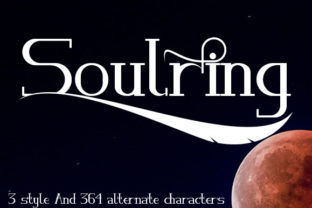
Soulring: A Playful Serif That Fits Right In—Without Trying Too Hard
Soulring isn’t just another serif font waiting for its moment in the sun—it’s the kind of typeface that shows up to a design project like an old friend who remembers your favorite coffee order and quietly makes everything feel more intentional. With its gentle curves, balanced proportions, and subtle personality, Soulring bridges classic readability and contemporary charm. It’s not overly ornate, but it’s never bland. And that’s exactly why designers, small business owners, educators, and even indie publishers are reaching for it when they want text to feel both trustworthy and alive.
Where Soulring Shines—Real Projects, Real People
Think about the last time you paused on a beautifully designed book cover, a thoughtful wedding invitation, or a boutique café’s menu board. Chances are, the typeface played a quiet but powerful role in how you felt about the brand or message. Soulring excels in those moments—where tone matters as much as legibility.
Small Businesses Building Warmth and Credibility
A local pottery studio launching its first website? A handmade soap brand refreshing its product labels? Soulring works beautifully here—not because it shouts “look at me,” but because it says, “we care about craft, detail, and how things feel.” Its gentle serifs and open letterforms lend approachability without sacrificing polish. Unlike ultra-thin or high-contrast serifs that can feel distant or formal, Soulring keeps things grounded. It pairs effortlessly with soft photography, natural textures, and muted color palettes—making it a go-to for brands rooted in authenticity.
Editors, Writers, and Indie Publishers
If you’ve ever wrestled with body text that feels either too cold (looking at you, modern sans-serifs) or too fussy (hello, decorative display fonts), Soulring offers a compelling middle path. Its x-height is generous, spacing is forgiving, and its rhythm encourages comfortable reading—even in longer-form content like zines, literary magazines, or self-published novels. One independent poet told us she chose Soulring for her chapbook because “it held space for silence between lines, but never disappeared into the background.” That balance is rare—and valuable.
Educators and Nonprofits Communicating with Clarity and Care
When you’re designing workshop handouts, annual reports, or community newsletters, typography influences how seriously people take your message—and how willing they are to stay with it. Soulring reads clearly at 14–16pt sizes on screen and in print, and its letterforms avoid common accessibility pitfalls (like ambiguous i/l or O/0 confusion). It doesn’t scream “authority,” but it does whisper “we’ve thought this through”—a tone that resonates especially well with mission-driven organizations.
Who Might Want to Pause Before Using Soulring?
Like any thoughtful tool, Soulring isn’t magic—it’s most effective when matched to the right context. Here’s what to keep in mind before adding it to your next project:
- It’s not built for extreme scale contrast. While Soulring has character, it’s not a headline-first font designed to dominate billboards or mobile app banners. If your project hinges on bold visual hierarchy—think tech startup landing pages or high-energy social ads—you’ll likely want something bolder or more geometric for primary headings, then bring Soulring in for supporting text.
- It thrives in moderate weights. Soulring’s sweet spot lives between Regular and SemiBold. Going lighter (Thin or ExtraLight) can soften its presence too much, especially on lower-resolution screens or in printed materials with absorbent paper. Going heavier (Black) risks losing some of its playful nuance. Stick to Medium or SemiBold for maximum versatility.
- Pairing matters—especially with sans-serifs. Soulring loves clean, humanist sans-serifs like Inter, Manrope, or even Roboto. Avoid stark, geometric sans-serifs (like Montserrat Bold or Futura) unless you’re aiming for deliberate tension—they can clash rather than complement.
Unexpected Places Soulring Adds Quiet Confidence
Some of the most satisfying uses of Soulring happen outside obvious design contexts:
- Internal team documentation. One remote design agency switched their internal wiki and style guide from Open Sans to Soulring—and reported higher engagement during onboarding. Team members said it “felt less like reading a manual and more like being welcomed into a conversation.”
- Event signage for hybrid conferences. When attendees move between physical rooms and virtual breakout sessions, consistent, legible, emotionally steady typography helps reduce cognitive load. Soulring’s even color and moderate contrast made slide decks, name tags, and agenda boards feel cohesive—not clinical.
- Personal branding for therapists and coaches. In fields where warmth and professionalism must coexist, Soulring avoids the sterility of many corporate fonts while staying far from the whimsy of script or display fonts. Its structure supports trust; its details invite connection.
What Makes Soulring Feel “Classic Yet Playful”?
It’s in the details: the slight flare on the uppercase T, the soft curve of the lowercase a, the way the g sits comfortably on the baseline without leaning too far into nostalgia. These aren’t gimmicks—they’re thoughtful refinements that add texture without demanding attention. Unlike fonts that rely on dramatic contrast or eccentric shapes to stand out, Soulring earns its presence by feeling *right*—not loud, not flashy, just genuinely well-suited to the work it’s doing.
That’s also why it adapts so well across mediums. Whether rendered on a laser-printed letterhead, embedded in a PDF report, or served via variable font tech on a responsive site, Soulring maintains its integrity. No rendering quirks. No awkward hinting. Just reliable, readable, human-centered type.
Getting Started—Practical First Steps
If you’re curious whether Soulring fits your current project, try this: open your document or design file and swap your current body font with Soulring at 16pt. Read three full paragraphs aloud—or better yet, ask someone else to skim them. Notice where your eye lingers, where it stumbles, where it relaxes. Does the tone shift in a way that supports your intent? Does it feel like a natural extension of your voice—or does it pull focus?
You don’t need to commit to a full rebrand to test it. Try Soulring in one email newsletter, one section of your portfolio site, or the “About” page of your small business. See how it changes the temperature of your message—not just how it looks, but how it lands.
Because at its best, Soulring doesn’t draw attention to itself. It draws attention to you—and the ideas, products, stories, or services you’re sharing with the world.