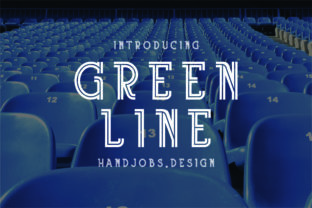
Green Line: A Distinctive Serif Font for Bold Brand Identities
When choosing a typeface that balances tradition with personality, Green Line stands apart—not just visually, but conceptually. It’s not another revival of classic serifs or a minimalist reinterpretation. Instead, Green Line is a deliberate fusion: a serif foundation energized by the rhythm, confidence, and clean geometry of sports typography. Its uppercase letters carry the bold stance of a team jersey, the precision of a scoreboard font, and the quiet authority of editorial elegance—all in one cohesive family.
What Makes Green Line Unique?
At first glance, Green Line reads as confident and grounded—traits often associated with strong branding. But look closer: its serifs are subtly tapered, not bracketed; its vertical strokes have gentle modulation, not rigid uniformity; and its letterforms maintain consistent optical weight across sizes. These details weren’t added for ornamentation—they were engineered for impact and legibility in real-world use.
The sports-inspired influence isn’t about literal motifs like stripes or swooshes. Rather, it’s reflected in:
- Rhythmic spacing—letters breathe evenly, supporting fast visual scanning (ideal for posters or digital banners);
- High x-height and open counters—enhancing readability at smaller sizes without sacrificing character;
- Confident uppercase forms—designed to command attention in logos, signage, and headlines;
- Intentional asymmetry in terminals—adding warmth and human nuance, avoiding sterile perfection.
This combination makes Green Line unusually versatile: it feels at home on a luxury boutique storefront and equally appropriate on an indie music festival poster. It bridges formal and expressive—without leaning too far into either.
Where Green Line Shines Most
Not every font works everywhere—and that’s a strength, not a flaw. Green Line excels where distinction matters most. Here’s where users consistently report standout results:
Logos & Brand Identity Systems
Because its uppercase set is so distinctive—yet legible and scalable—Green Line is frequently chosen for wordmarks and monogram-based logos. Designers appreciate how it conveys heritage (via serif structure) while signaling forward motion (via its athletic cadence). A coffee roaster, a design studio, or a boutique fitness brand can all leverage Green Line to communicate authenticity and energy in equal measure.
Print & Environmental Design
From concert posters to gallery wall text to packaging labels, Green Line holds up beautifully in large-scale applications. Its robust stroke contrast ensures crisp reproduction on vinyl, screen-printed fabric, or matte paper stock. Unlike some high-contrast serifs that risk filling in at size, Green Line maintains clarity—even when reversed out of dark backgrounds.
Digital Interfaces & Editorial Layouts
While primarily designed for display use, thoughtful pairing with a neutral sans-serif body font creates compelling hierarchy in websites, newsletters, and digital magazines. Its strong voice works best for headlines, section titles, pull quotes, and CTA buttons—never as paragraph text. That limitation isn’t a weakness; it’s intentional focus.
Who Benefits From Using Green Line?
You don’t need to be a typographic expert to benefit from Green Line. In fact, its clarity and distinctiveness make it especially valuable for:
- Small business owners launching a new brand—no need for custom lettering when Green Line delivers signature presence out of the box;
- Freelance designers building identity systems under tight timelines—its reliability across formats saves revision rounds;
- Marketing teams managing consistent visual language across social, email, and print—Green Line scales predictably;
- Art directors seeking a serif with attitude for campaigns that refuse to blend in;
- Students and emerging creatives learning how type carries tone—Green Line offers rich lessons in contrast, rhythm, and intentionality.
Real-World Applications You Can Learn From
Consider these practical examples:
- A regional cycling apparel brand used Green Line for its logo and product tags. The font’s upright posture and subtle dynamism mirrored the brand’s values: endurance, precision, and quiet confidence. Customers reported recognizing the logo instantly—even on blurred Instagram Stories.
- An independent bookstore applied Green Line to window decals and event posters. Its legibility from sidewalk distance increased foot traffic during seasonal promotions—and its warmth helped soften the formality often associated with serif fonts.
- A nonprofit focused on youth mentorship adopted Green Line for its annual report cover and donor recognition page. The font conveyed both gravitas and approachability—critical when balancing institutional trust with human connection.
Strengths to Lean Into
What sets Green Line apart isn’t novelty for novelty’s sake—it’s functional differentiation:
- Instant recognizability—few serifs occupy this exact space between editorial and athletic, making it memorable without being gimmicky;
- Cross-medium consistency—works as well on a 24” banner as it does on a 16px web headline;
- Emotional resonance—communicates strength, clarity, and integrity without sounding corporate or cold;
- Design efficiency—reduces the need for heavy kerning adjustments or manual tracking tweaks in most common uses.
Practical Considerations Before You Choose
Like any specialized tool, Green Line performs best when matched to the right job. Keep these points in mind:
- It’s display-first: Not intended for body copy. If your project requires extensive reading text, pair it thoughtfully with a highly legible sans-serif or low-contrast serif.
- Uppercase emphasis: While it includes lowercase characters, its true power lies in its uppercase forms. If your branding relies heavily on sentence-case usage (e.g., app interfaces or conversational UI), test thoroughly for rhythm and balance.
- Licensing scope matters: Confirm whether your intended use—especially in apps, SaaS platforms, or merchandise—is covered under the license you select. Some versions include extended web or desktop rights; others are limited to print-only.
- Contrast sensitivity: In very low-light digital environments or on textured surfaces, its moderate stroke contrast may require slight size or weight adjustment for optimal legibility.
Evaluating Fit for Your Project
Ask yourself these three questions before committing to Green Line:
- Does my project need to stand out—not just look polished? If “distinctive” is a core goal (not just “professional”), Green Line is worth serious consideration.
- Will this typeface appear in large, impactful moments? Logos, headlines, signage, hero sections—if yes, its strengths align directly with those needs.
- Do I value clarity of message over trendiness? Green Line avoids fleeting stylistic fads. It prioritizes function, emotion, and timelessness—making it a durable choice for brands planning to evolve over years, not seasons.
In short, Green Line isn’t about fitting in. It’s about claiming space—with intelligence, grace, and unmistakable presence. Whether you're refining a decade-old brand or launching something entirely new, this serif offers more than aesthetics. It offers attitude with authority, tradition with tension, and distinction with purpose.
When the right font doesn’t just support your message—but amplifies it without saying a word—that’s when you’ve found something like Green Line.