Marline: Where Handwritten Charm Meets Bold Design Impact
There’s a quiet magic in fonts that feel like they were written by hand—not traced, not simulated, but alive with intention and personality. Marline is one of those rare typefaces that doesn’t just mimic handwriting; it celebrates it. With its confident strokes, expressive flourishes, and unmistakable warmth, Marline isn’t just another script font. It’s a design ally for creatives who want authenticity without sacrificing impact.
What Makes Marline Stand Out in a Sea of Scripts?
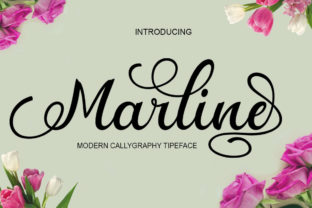
Not all handwritten fonts are created equal—and Marline proves it. While many scripts lean into delicate minimalism or overly casual looseness, Marline strikes a compelling middle ground: bold yet graceful, structured yet spontaneous. Its most defining feature? Those bold swashes. Not timid curls or subtle exits—but deliberate, dynamic extensions that sweep across letters like ink catching light on paper. They’re not decorative afterthoughts; they’re built into the rhythm of the typeface itself.
Take the uppercase “M” or “L”: each begins with a strong entry stroke and ends with a flourish that carries energy forward. The lowercase “y” and “g” feature deep, confident descenders with tapered curves. Even punctuation—like the ampersand or question mark—has been crafted with the same attention to flow and character. This level of detail means Marline performs beautifully at large sizes (think signage, posters, or hero banners), but also holds its own in mid-size applications like packaging labels or editorial pull quotes.
More Than Just Pretty Letters: Practical Strengths of Marline
Designers often hesitate to use expressive scripts because of legibility concerns, licensing limitations, or poor OpenType support. Marline addresses these head-on:
- High legibility at scale: Its generous x-height and open counters keep words readable—even when set tightly or overlaid on textured backgrounds.
- Cross-platform compatibility: Available in OTF and WOFF2 formats, Marline works seamlessly in Adobe Creative Cloud apps, Figma, Canva, and modern web environments.
- Smart OpenType features: Includes stylistic alternates, ligatures, and swash variants—so you can fine-tune tone without switching fonts. Want a more restrained look for body text? Swap in the standard glyphs. Need drama for a logo? Activate the swash capitals.
- Thoughtful language support: Covers Latin-based languages extensively—including extended diacritics for French, Spanish, Romanian, Turkish, and more—making it viable for global branding projects.
This isn’t a font you install and forget. Marline invites interaction. You’ll find yourself toggling between alternate ‘a’ forms or testing how the ‘t’ connects with a following ‘h’. That kind of engagement signals thoughtful design—and it translates directly into stronger visual communication.
Where Marline Shines: Real-World Use Cases
You don’t need a grand launch to justify using Marline. In fact, its versatility makes it ideal for both high-stakes and everyday applications:
- Branding & Logos: A coffee roaster named “Haven Grounds” used Marline for their wordmark—swashes softened slightly, paired with a clean sans-serif for taglines. The result? Warmth with authority. No stock-feel, no overused script clichés.
- Wedding Stationery: Couples love Marline for invitations because it balances romance and refinement. Unlike ultra-thin scripts that vanish under foil stamping, Marline’s weight holds up beautifully in letterpress, digital print, and even embroidery.
- Social Media Graphics: Instagram quote cards, Pinterest pins, and TikTok thumbnails benefit from Marline’s instant visual distinction. Its boldness reads fast on small screens—and its organic flow feels human in an algorithm-driven feed.
- Packaging Design: A small-batch candle brand applied Marline to jar labels alongside muted earth tones. The contrast between tactile materials and lively typography made products stand out on crowded shelves—and on resale platforms like Etsy.
- Web Headers & Hero Text: When used as CSS
@font-facewith proper fallbacks, Marline adds distinctiveness to headlines without slowing load times—especially when served via modern font-display strategies.
Pairing Marline Thoughtfully: Complement, Don’t Compete
A powerful script like Marline demands smart pairing. The goal isn’t contrast for contrast’s sake—it’s harmony that serves your message. Here’s what works—and why:
- Geometric sans-serifs (like Montserrat, Poppins, or Inter): Their clean lines act as a grounded counterpoint to Marline’s movement. Ideal for tech startups adding humanity to their voice—or wellness brands balancing science and soul.
- Low-contrast serifs (such as Lora or Merriweather): These share Marline’s warmth but bring structure and readability to longer text blocks. Perfect for editorial layouts, recipe blogs, or boutique hotel websites.
- Avoid overly decorative companions: Two expressive fonts cancel each other out. Skip script-on-script combos or anything with competing swashes or heavy texture.
Pro tip: Try setting Marline at 36–48px for headlines, then drop to 18–22px for subheads using a supporting font. Let Marline breathe—don’t crowd it with tight leading or dense paragraphs.
Choosing Marline: What Designers Actually Consider
Before licensing any premium font, professionals weigh real-world factors—not just aesthetics. Here’s how Marline measures up:
Licensing clarity: Marline offers straightforward desktop, web, and app licenses—with no hidden caps on pageviews or installations. For agencies managing multiple clients, the multi-seat option simplifies compliance.
File size & performance: At under 120KB for the full family (regular + swash variants), Marline loads quickly—even on mobile connections. That matters for SEO and Core Web Vitals, especially when used above the fold.
Customization potential: While Marline isn’t variable (yet), its OpenType richness means you can achieve nuance without custom kerning tables. Many users report spending less time adjusting letter spacing and more time refining hierarchy and color.
Support & updates: The foundry provides prompt email assistance and periodic updates—including new language extensions and minor refinements based on user feedback. That responsiveness builds trust, especially for long-term brand systems.
A Note on Authenticity—And Why It Matters Now
In an age of AI-generated visuals and templated designs, audiences respond deeply to work that feels genuinely human. Marline doesn’t hide its hand-drawn roots—it leans into them. That authenticity resonates across demographics: Gen Z shoppers scanning for values-aligned brands, B2B buyers seeking partners who communicate with clarity and care, or educators crafting materials that feel inviting rather than institutional.
It’s not about nostalgia. It’s about signaling intentionality—choosing a font that says, “We made this with thought, not just speed.” And when your audience senses that, engagement follows.
Getting Started with Marline—Without Overcomplicating It
You don’t need advanced typography training to use Marline well. Start simple:
- Download the trial first—test it in your actual workflow (not just a font previewer).
- Try it on one high-visibility asset: a logo lockup, a social banner, or your email signature.
- Pay attention to how it behaves with your brand colors. Does it soften a bold palette? Add warmth to cool tones? Let it guide your next color decision.
- When in doubt, simplify: use Marline for one line only—your brand name, a headline, or a single evocative word like “Welcome” or “Create.”
Marline rewards patience. It won’t shout over every other element—but when it speaks, people listen. And that’s the mark of a truly effective type choice.