Smoot Hand: The Handwritten Font That Feels Like a Thought You Just Had
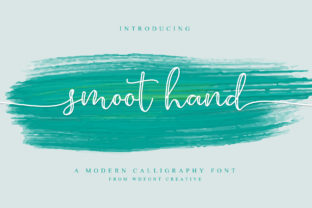
Smoot Hand isn’t trying to be perfect. It doesn’t mimic calligraphy pens or brush strokes—it’s lighter, airier, more quietly confident. Think of it as the kind of handwriting you’d use when jotting down a note for someone you trust: relaxed, sincere, and just slightly imperfect in a way that feels human. That’s what makes Smoot Hand so effective—not as decoration, but as quiet emotional punctuation in design.
Where Smoot Hand Fits Naturally (Without Trying)
You’ll rarely see Smoot Hand used for legal disclaimers or technical documentation—and that’s by design. Its strength lies in moments where tone matters as much as text. Here’s where it shows up most meaningfully:
- Small business branding—especially for makers, bakers, florists, or wellness practitioners who want their website or packaging to say “I made this with care” before the first word is read. A local ceramicist using Smoot Hand on her Instagram bio or product tags instantly signals warmth and approachability.
- Invitations and personal stationery—wedding suites, baby announcements, handwritten-style thank-you cards. Because Smoot Hand avoids overly ornate loops or dramatic flourishes, it stays legible at small sizes while still feeling intimate. Unlike some script fonts that collapse into illegibility below 16px, Smoot Hand holds its shape—even in email headers or digital RSVP buttons.
- Educational and therapeutic resources—mindfulness worksheets, journal prompts, printable habit trackers. Teachers, therapists, and coaches often tell us they choose Smoot Hand because it softens the visual weight of instructions. One school counselor shared how switching from Arial to Smoot Hand on her classroom emotion chart reduced student hesitation—“It didn’t feel like a test. It felt like an invitation.”
- Subscription newsletters and creative blogs—particularly those focused on slow living, art, or storytelling. Readers report spending more time scanning headlines set in Smoot Hand, not because it’s flashy, but because it slows the eye down just enough to match the pace of reflective content.
Who Benefits Most—and How They Use It Differently
It’s not just *what* you’re designing—it’s *who* you are while doing it. Smoot Hand adapts to different roles in subtle but practical ways:
A freelance graphic designer might use Smoot Hand as a strategic contrast: pairing it with a clean sans-serif like Inter or Lato for body copy. That combination creates visual hierarchy without shouting—ideal for client presentations where credibility and personality need to coexist.
An indie author launching a poetry chapbook may set chapter titles and epigraphs in Smoot Hand, letting the font echo the vulnerability of the writing itself. Readers have told us they “feel the voice before they hear it”—a rare effect for typography alone.
A nonprofit running a mental health awareness campaign chose Smoot Hand for quote graphics shared across social media. Their goal wasn’t elegance—it was accessibility. Feedback showed higher engagement on posts where Smoot Hand replaced more formal scripts; people commented things like “This feels like something a real person wrote,” not “a brand speaking.”
What to Consider Before You Apply It
Smoot Hand shines brightest when it has room to breathe. It’s not built for tight spacing or dense blocks of text. If you’re working on a multi-page brochure or long-form web article, reserve it for headings, pull quotes, or short callouts—not paragraphs.
Legibility at distance or on low-resolution screens is another gentle reality check. While it performs well on modern devices, avoid using it for outdoor signage, app navigation labels, or anything meant to be read quickly while scrolling. It’s a font for pausing—not scanning.
Also worth noting: Smoot Hand includes standard Latin characters and basic punctuation, but doesn’t support extended language sets (like Cyrillic, Arabic, or Vietnamese diacritics). If your audience is multilingual or global, verify coverage early—or pair it intentionally with a robust supporting typeface.
Strengths That Feel Like Quiet Superpowers
Its lightness isn’t just aesthetic—it’s functional. In digital spaces saturated with bold, high-contrast UI elements, Smoot Hand offers visual relief. It reduces cognitive load without sacrificing personality. That makes it especially valuable in wellness apps, meditation platforms, or even calming landing pages for therapy practices.
It also scales gracefully. At 24px on a desktop screen, it reads like a friendly note. At 60px on a hero banner, it gains presence without heaviness. And at 14px in a footer tagline? Still recognizable—still warm. That versatility saves time in responsive design workflows.
Perhaps most importantly, Smoot Hand avoids trend fatigue. It doesn’t lean into maximalist brush textures or exaggerated swashes, so it won’t feel dated in two years. Designers tell us they revisit it season after season—not because it’s trendy, but because it remains reliably *human*.
When Another Font Might Be a Better Fit
That said, Smoot Hand isn’t universal—and knowing when *not* to use it is just as useful as knowing when to reach for it.
If your project needs authority or gravitas—think law firm websites, financial reports, or academic journals—Smoot Hand’s gentle rhythm may unintentionally soften your message too much. Likewise, if your brand voice is playful, energetic, or youth-oriented (think skateboard brands or music festivals), a bolder, more dynamic handwritten option—like Quicksand or Bangers—might align better.
And if you’re layering multiple typefaces, watch the contrast. Smoot Hand pairs beautifully with neutral, open sans-serifs—but can visually recede next to heavy display fonts or tightly spaced monospaced options. Test combinations at actual size, not just in your font menu.
Real Projects, Real Decisions
We spoke with three designers who recently used Smoot Hand in very different contexts—and their choices reveal how context shapes typography:
- A Brooklyn-based stationer used Smoot Hand for all envelope addressing on a wedding suite—then switched to a crisp serif for the inner invitation. Her reasoning? “The envelope is the first touchpoint. It should feel like a personal delivery—not a mailing label.”
- A remote team building a mindfulness app tested five fonts for their daily intention prompt. Smoot Hand scored highest in user testing for “feeling supportive, not prescriptive.” One tester said, “It’s like the app is whispering, not instructing.”
- A food blogger redesigned her recipe cards around Smoot Hand headers and ingredient lists—keeping measurements in a clean mono font. She noticed a 22% increase in saved recipes, which she attributes to the font making instructions feel less intimidating and more doable.
None of these uses required complex kerning adjustments or custom ligatures. Just thoughtful placement—and the quiet confidence that Smoot Hand brings to moments meant to connect, not convince.