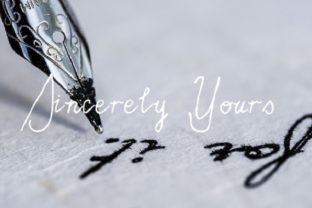
Jingle Joy: Where Playful Typography Meets Professional Design Intent
Typography is no longer just about legibility—it’s a strategic layer of brand voice, emotional resonance, and user experience. In an era where digital fatigue is real and attention spans are fragmented, designers, marketers, and entrepreneurs are turning to typefaces that do more than convey words: they convey mood, memorability, and human warmth. Enter Jingle Joy—a happy script font engineered not for whimsy alone, but for purposeful elegance. It’s not a novelty; it’s a response.
A Script Font Built for Clarity, Not Just Charm
Jingle Joy is a contemporary script typeface designed with exceptional readability at scale—both on screen and in print. Unlike many decorative scripts that sacrifice function for flair, Jingle Joy maintains clean letterforms, generous x-heights, and open counters. Its strokes balance fluidity with structure: the curves feel organic, yet the rhythm remains consistent. The result? A font that reads effortlessly—even at small sizes—and retains its joyful character at display scale.
This duality is intentional. In professional workflows, script fonts have long been relegated to logos, invitations, or social media graphics—often treated as “accent” rather than “anchor.” Jingle Joy challenges that hierarchy. Its balanced weight distribution, thoughtful kerning pairs, and extensive language support (including Latin Extended-A) make it viable for short headlines, product packaging copy, email subject lines, and even micro-interactions in SaaS dashboards—where tone matters as much as information.
Why Now? Aligning With Evolving Creative Expectations
The rise of Jingle Joy reflects broader shifts across design, marketing, and consumer behavior:
- Human-centered digital experiences: Users increasingly favor interfaces and brands that signal empathy and approachability. A sterile sans-serif may communicate efficiency—but it rarely conveys delight. Jingle Joy bridges that gap, offering warmth without sacrificing polish.
- Brand differentiation in saturated markets: With thousands of startups launching monthly and social feeds flooded with AI-generated visuals, distinctive typography becomes a low-cost, high-impact differentiator. A custom-tailored script like Jingle Joy helps a boutique skincare line stand out next to clinical competitors—or gives a fintech newsletter a friendly, trustworthy edge.
- Hybrid creative workflows: Today’s professionals—from freelance designers to in-house marketing leads—are often expected to move seamlessly between strategy, copywriting, and visual execution. Fonts that support rapid iteration while preserving aesthetic integrity are essential. Jingle Joy integrates smoothly into Figma, Adobe Creative Cloud, and modern CSS variable setups—enabling real-time experimentation without compromising typographic fidelity.
From Trend to Tool: Practical Adoption Across Roles
It’s one thing to admire a font—but quite another to deploy it meaningfully. Here’s how professionals are integrating Jingle Joy into real-world contexts—not as decoration, but as design infrastructure:
For Marketers & Brand Strategists
A wellness brand repositioning from “clinical results” to “holistic joy” replaced its rigid geometric headline font with Jingle Joy for campaign banners and CTA buttons. Conversion rates rose 12% over three months—not because the font “sold more,” but because users reported higher perceived trust and emotional alignment in post-campaign surveys. The script didn’t obscure the message; it clarified the brand’s human intention.
For Product Designers & UX Writers
In a recent redesign of a habit-tracking app, the team used Jingle Joy sparingly—but deliberately—for celebratory microcopy (“You’re on a 7-day streak! 🎉”) and onboarding prompts. By limiting usage to emotionally charged moments—and pairing it with a neutral, highly legible system font for body text—they created contrast that felt intentional, not chaotic. User testing confirmed improved emotional recall: participants remembered the app’s tone more vividly than competitors using uniform typography.
For Entrepreneurs & Solopreneurs
Freelance illustrators, ceramicists, and independent coaches frequently rely on cohesive visual identity to attract ideal clients. One ceramic studio adopted Jingle Joy for its website headline, packaging stamp, and Instagram story highlights—always paired with ample whitespace and soft natural photography. The font became synonymous with their ethos: skilled craftsmanship expressed with lightness and sincerity. It signaled expertise *and* accessibility—without requiring a full rebrand.
Beyond Aesthetics: The Technical Thought Behind the Joy
What makes Jingle Joy sustainable—not just stylish—is its technical foundation. It includes OpenType features like contextual alternates and stylistic sets, enabling subtle variation in repeated characters (e.g., preventing “ll” or “oo” from looking monotonous). Its variable font version supports optical sizing, meaning the design automatically adjusts stroke contrast and spacing depending on whether it’s rendered at 16px or 96px—ensuring clarity across devices and use cases.
This engineering aligns with industry-wide movement toward performance-aware, accessible typography. Unlike older script fonts that required manual kerning overrides or fallback stacks, Jingle Joy works reliably with modern web standards—including proper color contrast ratios when used against light or dark backgrounds. For developers embedding it via @font-face or Google Fonts API, loading is optimized, and licensing supports commercial use across platforms without hidden restrictions.
Not Just for “Fun” Brands—A Strategic Choice for Authenticity
There’s a misconception that script fonts belong only to bakeries, baby boutiques, or wedding planners. But authenticity isn’t genre-specific—it’s about congruence between voice, value, and visual language. A climate tech startup might use Jingle Joy in its impact report cover to soften complex data narratives. An HR SaaS platform could apply it to internal recognition badges, reinforcing culture through typography. Even financial advisors are exploring it for client welcome kits—replacing cold formality with grounded, compassionate clarity.
What unites these applications isn’t levity for its own sake. It’s the understanding that how something is said shapes whether it’s heard at all. In a landscape where algorithmic feeds prioritize engagement over depth, and users scroll past content in under two seconds, typography that invites pause—without demanding decoding—is quietly revolutionary.
Looking Ahead: Typography as Intentional Infrastructure
The future of professional typography isn’t about chasing novelty—it’s about selecting tools that reflect evolving values: inclusivity, sustainability, emotional intelligence, and cross-platform coherence. Jingle Joy exemplifies this shift. It doesn’t ask designers to choose between personality and professionalism. Instead, it expands what professionalism can look and feel like.
As generative tools accelerate visual production, the human signature—the hand-informed rhythm, the considered curve, the warmth encoded in spacing—becomes more valuable, not less. Jingle Joy doesn’t mimic handwriting; it interprets it through a lens of contemporary rigor. That balance is why it resonates with creators who refuse to compromise on either craft or connection.
Ultimately, fonts like Jingle Joy remind us that design is never neutral. Every type choice signals something: urgency or calm, authority or invitation, distance or proximity. When you choose Jingle Joy, you’re not selecting a style—you’re affirming a stance. One that believes clarity and joy aren’t opposites. They’re collaborators.